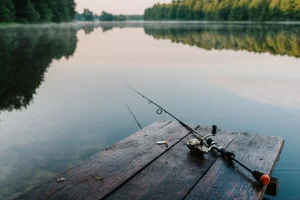
Owning a lakefront home on the Chain O’Lakes requires more than ordinary seasonal home maintenance. Waterfront homeowners should regularly inspect their shoreline, dock or pier, drainage, foundation, exterior systems and flood-preparation equipment, while also maintaining septic and well systems when applicable. Spring and fall are especially important times for a thorough waterfront property inspection.
Lakefront Home Maintenance Is Different in Northern Illinois
Living on the Chain O’Lakes comes with a relationship to the water that changes throughout the year.
Northern Illinois gives us hot summers, freezing winters, spring thaws, heavy rain, storms and fluctuating water conditions. A waterfront home may also have features that an ordinary residential property does not, including a pier, boat lift, seawall, natural shoreline, shoreline landscaping or waterfront electrical equipment.
Our guide to living on the Chain O’Lakes explains the broader waterfront lifestyle. For homeowners, part of enjoying that lifestyle is staying ahead of maintenance.
A good approach is to divide waterfront maintenance into four seasons.
What Should Chain O’Lakes Homeowners Check in Spring?
Spring is one of the most important inspection periods for a lakefront property.
After freezing temperatures, snow, ice and spring thaw, walk the property and look carefully for changes that occurred over winter.
Check:
Foundation walls and basement areas for signs of moisture or water intrusion
Sump pumps and backup systems
Gutters and downspouts
Grading and drainage around the home
Shoreline areas for erosion or soil loss
Seawalls for movement, cracking or deterioration
Piers and docks for winter or ice damage
Boat lifts and waterfront electrical equipment before use
Exterior stairs, decks and railings
Trees and branches damaged by winter weather
Lake County specifically recommends that homeowners in flood-prone areas make sure the backwater valve on a sump pump is functioning properly and consider a backup pump. Lake County also provides flood-risk, floodplain and emergency-preparedness resources for property owners.
Spring is also a good time to look at how water moves across your property. Downspouts and drainage should move stormwater appropriately rather than creating erosion or repeatedly directing water toward the foundation or shoreline.
Inspect Your Shoreline, Not Just Your House
The shoreline deserves its own inspection.
Look for exposed soil, newly undercut areas, slumping, displaced stones, failing vegetation and changes around seawalls or other shoreline improvements.
The amount of exposure can vary considerably depending on whether a home faces open water, a protected bay or a channel. Our guide to the different types of Chain O’Lakes waterfront explains why waterfront location affects everyday conditions.
Lake County recommends native plant buffers along shorelines as a way to stabilize banks, reduce erosion and filter runoff. Its guidance says native plant buffers should include at least 10 feet of dense native vegetation along the water’s edge and streambank.
That does not mean every Chain O’Lakes property should be landscaped exactly the same way. Shorelines, existing structures, local rules and homeowner needs vary. It does mean that erosion should not be ignored until it becomes a major repair.
Summer Is the Time for Routine Waterfront Maintenance
Once boating season is underway, maintenance shifts from spring inspection to regular observation.
Walk the waterfront periodically and look for loose dock hardware, damaged decking, unstable steps, deteriorating shoreline areas and anything that has changed since your previous inspection.
Pay attention after major storms or unusual water conditions.
The Fox Waterway Agency provides current waterway status and links to USGS water-level information for locations including Fox Lake near Lake Villa, Nippersink Lake at Fox Lake, the Fox River at Johnsburg and the Fox River near McHenry.
Water levels can change with weather, seasonal conditions and water-management activity. High-water events can also result in no-wake restrictions or closures, making current Fox Waterway Agency information useful for both boaters and waterfront homeowners.
Summer is also a good time to:
Keep gutters and drainage paths clear
Inspect exterior wood and painted surfaces
Watch for shoreline erosion after storms
Check outdoor lighting and waterfront electrical systems
Keep leaves, grass clippings, fertilizer and other materials from washing into the water
Maintain native shoreline vegetation where appropriate
Watch for signs of septic problems if your home uses an onsite wastewater system
What Should You Know About Septic Systems Near the Water?
Not every Chain O’Lakes home has a septic system, but owners of properties that do should make maintenance a priority.
The Illinois EPA says septic systems are the homeowner’s responsibility and recommends annual inspection for sludge and solids, with pumping generally every two to three years or more frequently when needed.
A malfunctioning system can affect groundwater, wells, rivers and lakes.
Warning signs can include slow drains, sewage backups, wet areas over the absorption field, sewage odors or unusually lush growth over part of the system.
After flooding, Lake County advises homeowners to reduce nonessential water use and consult a licensed septic professional before pumping a septic tank or related system. A system suspected of flood damage should be professionally inspected.
Fall Is Preparation Season on the Chain O’Lakes
For many lakefront homeowners, fall may be the most valuable preventive-maintenance season of the year.
This is the time to prepare both the house and waterfront for freezing weather.
A fall checklist may include:
Clean gutters and confirm downspouts are working properly
Inspect the roof and exterior before snow arrives
Service the heating system
Protect exterior plumbing from freezing
Follow manufacturer recommendations for outdoor faucets and irrigation systems
Inspect weather stripping and exterior caulking
Test smoke and carbon monoxide alarms
Check the sump pump and backup power
Remove or winterize seasonal waterfront equipment as appropriate
Winterize boat lifts, docks or other equipment according to manufacturer instructions
Remove loose outdoor items that could be damaged by winter weather
Individual dock and lift systems differ, so homeowners should follow the manufacturer’s instructions and use qualified marine contractors when professional service is appropriate.
Fall is also an excellent time to photograph your shoreline, seawall, dock and exterior. Those photos provide a simple reference when you inspect the property again in spring.
Do Not Assume You Can Repair or Replace a Seawall Without Approval
This is an important distinction for Chain O’Lakes homeowners.
The Fox Waterway Agency states that it does not regulate piers or seawalls. Its current guidance directs property owners to the U.S. Army Corps of Engineers and Illinois Department of Natural Resources regarding permits and also advises checking with the applicable municipality or county because additional approvals may be required.
The Illinois DNR Office of Water Resources regulates certain work in and along Illinois rivers, lakes, streams and public waters.
McHenry County similarly advises that projects within the Chain O’Lakes, Fox River or other floodway areas may require Illinois DNR Office of Water Resources approval, with U.S. Army Corps of Engineers permitting potentially applying in some situations as well.
The practical lesson is simple: before replacing, substantially repairing or altering a pier, seawall, shoreline or other waterfront improvement, determine which approvals apply to that specific property and project.
Winter Maintenance Still Matters
Winter does not mean a lakefront property can be forgotten until spring.
Watch for:
Ice or snow damage to exterior components
Ice dams or roof problems
Frozen or vulnerable plumbing
Water in the basement or crawlspace during temperature swings
Damage to shoreline structures
Fallen limbs or storm damage
Problems with vacant or seasonally occupied homes
If the property will be unoccupied for extended periods, consider professional winterization and regular property checks.
A small leak, heating failure or frozen pipe can become a much larger problem when nobody is there to notice it.
Flood Preparedness Should Be a Year-Round Task
Waterfront ownership and flood risk are not the same thing, and individual properties can have very different flood exposure.
Lake County recommends knowing your flood risk, maintaining a household inventory, protecting important documents and creating a household emergency plan.
Homeowners can also review FEMA flood maps and local floodplain information rather than assuming that proximity to the lake alone tells them everything about a property's risk.
The Fox Waterway Agency divides its jurisdiction into three waterway zones. Zone C covers the Chain O’Lakes from the mouth of the Fox River at Pistakee Lake north to the Wisconsin state line and includes the interconnected lakes in the system.
Homeowners can monitor Fox Waterway Agency waterway status and water-level information during periods of heavy rain or changing conditions.
Local Conditions Can Vary From One Lakefront Property to Another
One reason a single maintenance checklist cannot cover every situation is the diversity of the Chain O’Lakes.
Open-water frontage can experience different wave action and exposure than a protected channel or bay.
Shorelines can be natural, landscaped or improved with seawalls. Some homes sit higher above the water while others have different relationships to floodplain areas.
Our Chain O’Lakes lake guide provides additional information about the lakes and communities around the system.
The important point for homeowners is to learn the characteristics of their specific property rather than treating every lakefront home the same.
What Does Maintenance Mean When Buying or Selling a Waterfront Home?
Maintenance history can become particularly relevant when a lakefront property changes owners.
Buyers may want to understand the condition and history of features such as the shoreline, seawall, pier, dock, lift, drainage, sump system, well and septic system when applicable.
Anyone considering buying a waterfront home on the Chain O’Lakes should evaluate the property itself and its relationship to the water.
For sellers, taking care of visible deferred maintenance before going on the market can help buyers better understand how the property has been maintained. Waterfront features can be an important part of a property's appeal, but their condition matters.
Our guide to buying or selling a Chain O’Lakes waterfront home explores additional considerations.
The Star Home Team's Perspective
We believe lakefront home maintenance is easiest when it becomes routine rather than reactive.
Spring is for inspection and recovery from winter. Summer is for monitoring and upkeep. Fall is for preparation.
Winter is for protecting the property and watching for weather-related problems.
Most importantly, pay attention to the features that make your particular waterfront property different.
A home on open water may have different shoreline concerns than one on a quiet channel. A property with a septic system has different maintenance responsibilities from one connected to municipal sewer. A home within or near a floodplain may require different preparation from one at a higher elevation.
Knowing your property is part of knowing how to maintain it.
Frequently Asked Questions
What maintenance does a lakefront home need?
In addition to normal home maintenance, a lakefront property may require regular inspection of its shoreline, seawall, dock or pier, boat lift, waterfront electrical equipment, drainage and flood-preparation systems. Properties with private wells or septic systems require additional maintenance. The exact needs depend on the individual property and its waterfront features.
When should I inspect my Chain O’Lakes shoreline?
Spring is an especially useful time for a detailed shoreline inspection because winter ice, freezing temperatures and spring runoff can reveal or create problems. Homeowners should also check their shoreline after major storms, high-water conditions or other events that may contribute to erosion or damage.
How can I reduce erosion along my lakefront property?
Start by identifying the source and severity of the erosion. Lake County recommends native shoreline buffers because deep-rooted native vegetation can stabilize banks and help filter runoff. Significant erosion or structural shoreline work should be evaluated by qualified professionals, and permits may be required before waterfront construction begins.
Do I need a permit to repair a seawall on the Chain O’Lakes?
Permit requirements depend on the project and location. The Fox Waterway Agency says it does not regulate piers or seawalls and directs owners to the U.S. Army Corps of Engineers and Illinois DNR for permit questions. Local municipal or county requirements may also apply. Verify approvals before beginning work.
How often should a septic system be pumped?
Illinois EPA guidance recommends septic systems be inspected annually for sludge and solids and generally pumped every two to three years, or more frequently when needed. Usage, tank size and system conditions can affect maintenance needs. Waterfront owners should take septic maintenance seriously because malfunctioning systems can affect groundwater and nearby surface water.
Where can Chain O’Lakes homeowners check water levels?
The Fox Waterway Agency maintains a water-level page linking to USGS water data for several locations throughout the Fox River and Chain O’Lakes system, including Fox Lake, Nippersink Lake, Johnsburg and McHenry. The agency also posts current waterway status information.
What should I do to prepare a lakefront home for winter?
Fall preparation should include normal Northern Illinois home winterization plus waterfront-specific tasks. Inspect the shoreline and waterfront structures, follow manufacturer instructions for docks and lifts, protect plumbing, clean gutters, check the heating system, test the sump pump and backup system, and secure seasonal outdoor equipment.
Is every Chain O’Lakes waterfront property maintained the same way?
No. Maintenance can vary according to whether a home is on open lake water, a bay, channel or riverfront location, as well as the shoreline type, elevation, flood exposure, utilities and waterfront improvements. Homeowners should develop a maintenance plan based on the characteristics of their individual property.
A Little Maintenance Can Protect a Lot of Lakefront Enjoyment
Owning a home on the Chain O’Lakes gives homeowners a front-row seat to one of Northern Illinois' most distinctive waterfront areas.
It also means paying attention to both the house and the water's edge.
A seasonal routine makes that easier. Inspect in spring, maintain throughout summer, prepare carefully in fall and keep an eye on the property during winter.
When a project involves a seawall, pier, shoreline modification, floodplain or other regulated waterfront work, verify applicable requirements with the appropriate government agencies before starting.
And if maintaining your current lakefront home has you thinking about your next move, The Star Home Team can help you explore buying or selling waterfront property throughout the Chain O’Lakes area.
Sources
Fox Waterway Agency
“Water Levels”
Current 2026 page
https://foxwaterway.com/water-levels/
Fox Waterway Agency
“What are the Pier and Seawall Requirements?”
Updated 2026
https://foxwaterway.com/faq-items/pier-and-seawall-requirements/
Illinois Department of Natural Resources, Office of Water Resources
“Permit Program”
https://dnr.illinois.gov/waterresources/permitprograms.html
Illinois Environmental Protection Agency
“Septic System Maintenance”
https://epa.illinois.gov/topics/drinking-water/private-well-users/septic-system-maintenance.html
Lake County Stormwater Management Commission
“Flood Prevention & Preparedness”
https://www.lakecountyil.gov/3973/Flood-Prevention-Preparedness
Lake County, Illinois
“Native Plant Buffer (Riparian Buffer)”
https://www.lakecountyil.gov/3619/Native-Plant-Buffer
McHenry County, Illinois
“Do I Need a Stormwater Management Permit?”
https://www.mchenrycountyil.gov/departments/planning-development/water-resources/stormwater-management-permitting/do-i-need-a-stormwater-management-permit
About the Author
Susan Starwalt is the Broker Owner of Better Homes and Gardens Real Estate Star Homes and The Star Home Team, serving Northern Illinois and Southern Wisconsin. Licensed since 1998, Susan works alongside Jim Starwalt and the company's management team to support one of the region's top-producing real estate organizations.
The Star Home Team has helped more than 4,000 families buy and sell homes and is recognized as one of Illinois' leading real estate teams. The team serves buyers and sellers throughout Lake County, McHenry County, Kenosha County, and surrounding communities, providing expert guidance, local market knowledge, innovative marketing, and personalized service.
Ready to Take the Next Step?
Whether you're buying your first home, selling your current property, relocating, or simply exploring your options, The Star Home Team is here to help.
• Click here to search homes for sale.
• Learn more about buying and selling real estate in Northern Illinois and Southern Wisconsin by visiting our Real Estate Resource Center.
• Fill out our Contact Us form online to tell us about your real estate goals or send us a message anytime.
T
he Star Home Team proudly serves buyers and sellers throughout Northern Illinois and Southern Wisconsin.
Licensed in Illinois and Wisconsin.