Can You Live on the Chain O’Lakes Year Round? What Buyers Should Consider
Yes. The Chain O’Lakes is much more than a summer destination. People live throughout the Chain O’Lakes region of Northern Illinois year round, enjoying waterfront communities through summer boating, fall color, frozen winter landscapes and spring. For home buyers, however, year-round waterfront living requires understanding seasonal water levels, flooding, docks, shoreline maintenance, utilities and winter conditions before choosing a property.
The Chain O’Lakes Is a Four-Season Community
It is easy to think of the Chain O’Lakes primarily as a summer destination.
Warm-weather weekends bring boats, fishing, waterfront dining and activity throughout the lakes and Fox River. But that is only part of what living here is like.
The broader Chain O’Lakes region stretches across portions of Lake and McHenry Counties in Northern Illinois. Communities closely associated with the lakes include Fox Lake, Antioch, Lake Villa, Ingleside, Johnsburg and Spring Grove.
The Fox Waterway Agency identifies the Chain O’Lakes as Zone C of its waterway system, extending from the mouth of the Fox River at Pistakee Lake north to the Wisconsin state line and including 15 interconnected lakes.
If you are just getting familiar with the area, start with our complete guide to living on the Chain O’Lakes in Illinois.
For buyers considering making the Chain their full-time home, the more important question is not simply whether you can live here year round. It is whether a particular property works for the way you want to live during all four seasons.
What Is Winter Like on the Chain O’Lakes?
Winter changes the character of the Chain dramatically.
Boats disappear from many docks, waterfront traffic quiets down and freezing temperatures can bring ice and snow to the region. Winter recreation does not necessarily stop, however.
The Illinois Department of Natural Resources lists ice fishing, ice skating, snowshoeing and sledding among winter activities at Chain O’Lakes State Park when conditions permit. Cross-country skiing is also available when snowfall is sufficient.
Ice conditions are variable and should never be assumed safe simply because a lake appears frozen. Buyers planning to use the lakes recreationally in winter should follow current safety information and applicable regulations.
There is another seasonal change waterfront homeowners should understand: water levels.
The Illinois Department of Natural Resources operates the William G. Stratton Lock and Dam on the Fox River. IDNR states that winter drawdown of the Chain begins November 1 and is targeted for completion by December 1. The drawdown lowers the Chain approximately 1.5 feet to create additional storage for snowmelt and spring rainfall.
That means the view from a waterfront property, water depth at a pier and shoreline conditions can look noticeably different in winter than they do during the summer boating season.
Waterfront Location Matters All Year
Not every Chain O’Lakes waterfront property offers the same experience.
A home directly on open water can feel very different from one on a channel, protected bay or inlet. Those differences may affect views, boat traffic, wind exposure, wave action, water depth and dock conditions.
Buyers should consider how they expect to use the waterfront.
Do you want expansive lake views?
Is convenient boat access your priority?
Would you prefer a more protected waterfront location?
How important is water depth for your boat?
What does the shoreline look like during lower winter water levels?
Our guide to channel, bay and open-water properties on the Chain O’Lakes explains why the word “waterfront” alone does not tell you everything you need to know about a property.
Whenever possible, buyers should evaluate the actual waterfront rather than focusing only on the house.
Flood Risk Deserves Careful Attention
Waterfront living and flood risk are not the same thing, and buyers should not assume that every lakefront property is in a mapped floodplain. They also should not assume that a property is outside a flood-risk area simply because it has not flooded recently.
Lake County explains that a floodplain is an area adjacent to a stream or lake, or another low area, that may periodically be covered by water up to a defined elevation.
FEMA flood maps can be used as a starting point for determining whether a property is located in a mapped floodplain or floodway. Lake County also maintains floodplain information and, for some properties in unincorporated areas, Elevation Certificates.
Before purchasing a specific property, buyers may want to investigate:
• FEMA flood mapping for the parcel
• Available Elevation Certificates
• Past flooding or water intrusion disclosed for the property
• The elevation of the home relative to the water
• Drainage around the house
• Location of mechanical and electrical equipment
• Flood insurance considerations
• Local building or improvement requirements
Requirements can vary by property and jurisdiction, so property-specific questions should be directed to the appropriate municipality, county, insurer and other qualified professionals.
A Waterfront Home Has Additional Maintenance Considerations
Living on the Chain year round can also mean maintaining features that most non-waterfront homes do not have.
Depending on the property, those might include:
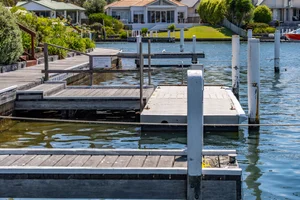
• Piers or docks
• Boat lifts
• Seawalls or other shoreline structures
• Natural shoreline areas
• Waterfront electrical equipment
• Shoreline landscaping
• Drainage systems
Northern Illinois weather adds another layer. Waterfront homes experience summer heat, freezing temperatures, snow, spring thaw, storms and changing water conditions.
Our Chain O’Lakes lakefront home maintenance guide covers many of the seasonal items waterfront owners should keep on their radar.
When viewing a home, buyers should look beyond the condition of the kitchen, bathrooms and roof. The condition of the shoreline and waterfront improvements may be equally important to understanding the property.
Check the Well and Septic System When Applicable
Not every home around the Chain has the same utility setup.
Some properties may be served by municipal water and sewer, while others may have a private well, septic system or both.
For properties within its jurisdiction, the Lake County Health Department offers well and septic evaluations for existing properties. The department notes that these evaluations are commonly requested during property sales or refinancing.
Its evaluation process can include a search of existing county records and an on-site inspection for visible signs of septic-system problems.
If you are considering a home with private systems, determine what systems serve the property and what inspections, evaluations or records are appropriate before purchasing.
Understand Boating Rules and Waterway Management
For many buyers, direct access to boating is one of the biggest attractions of living on the Chain.
The Fox Waterway Agency manages the Fox River and Chain O’Lakes waterway and publishes current water levels, waterway status, maps, ordinances, permits and other information.
FWA also requires boats operating on the Chain O’Lakes to display a current Fox Waterway Agency sticker. The sticker is valid from January 1 through December 31, and boats must also display the appropriate current state registration decal.
Waterway conditions can change because of weather and water levels. FWA publishes current status information, including whether sections of the system are open or under restrictions.
For someone planning to boat frequently, knowing where a property sits within the system can be just as important as knowing the home's square footage.
Think About the Property in Every Season
One of our favorite questions for a waterfront buyer is simple:
Would you still want this house in January?
A beautiful July showing can tell you a lot about the summer experience. It tells you much less about snow removal, winter access, lower water levels, frozen shoreline conditions or what the property feels like when the boating season has ended.
Likewise, a February showing does not fully demonstrate summer boat traffic, vegetation, dock setup or activity on the water.
If year-round living is your goal, think through the property season by season.
Spring
Consider drainage, snowmelt, changing water levels and how the property handles heavy rain.
Summer
Evaluate boating access, dock setup, water depth, boat traffic, outdoor living space and shoreline use.
Fall
Look at leaf management, shoreline preparation and how docks, lifts and other waterfront equipment are handled before winter.
Winter
Consider snow removal, road and driveway access, heating, exposure to wind and ice, winter water levels and how the waterfront is used or maintained.
Which Chain O’Lakes Community Is Right for You?
The Chain O’Lakes is a region, not one municipality.
Homes connected to the Chain can be found in and around several communities, including Fox Lake, Antioch, Lake Villa, Ingleside, Johnsburg and Spring Grove.
That gives buyers options beyond choosing a particular lake.
Commute patterns, shopping, municipal services, property characteristics and proximity to the places you visit regularly may matter just as much as the waterfront itself.
Our guide to the communities around the Chain O’Lakes can help buyers become familiar with the geography before narrowing their search.
What Should Buyers Check Before Purchasing a Chain O’Lakes Home?
Every property is different, but a useful starting checklist includes:
• Confirm whether the property has direct waterfront access
• Determine whether it is open-water, bay or channel frontage
• Investigate floodplain information for the specific parcel
• Ask about previous flooding or water intrusion
• Determine whether the property has municipal utilities, private well, septic or a combination
• Inspect the shoreline and any seawall or shoreline stabilization
• Evaluate the condition and ownership of docks, piers and lifts
• Investigate water depth and practical boat access
• Review applicable local and Fox Waterway Agency requirements
• Consider the property during winter and spring, not only summer
Buyers beginning their search can also review our guide to homes for sale on the Chain O’Lakes and what buyers should know.
The Star Home Team's Perspective
The best Chain O’Lakes property is not necessarily the home with the biggest water view or the longest stretch of shoreline.
It is the property that fits how you actually want to live.
Some buyers picture weekends filled with boating and entertaining. Others want a quieter waterfront setting where they can fish from the pier, watch the water and enjoy the changing seasons. Some care most about direct access to the larger lakes. Others may prefer a channel or more protected waterfront setting.
That is why we encourage buyers to evaluate both sides of the property: the house and the water.
The Chain O’Lakes can offer a distinctive year-round lifestyle, but buying waterfront property involves considerations that may not come up with a typical inland home. Understanding those details before purchasing can help you make a more informed decision.
Frequently Asked Questions
Can you live on the Chain O’Lakes year round?
Yes. The communities surrounding the Chain O’Lakes include year-round residential properties. The experience changes considerably by season, however. Buyers considering full-time waterfront living should evaluate winter access, flood exposure, water levels, shoreline conditions, utilities and maintenance along with the home's summer boating and recreational features.
What happens to the Chain O’Lakes in winter?
The area becomes much quieter, and winter recreation can include ice fishing, ice skating, snowshoeing, sledding and cross-country skiing when conditions permit. Illinois DNR also conducts a winter water-level drawdown. It begins November 1 and is targeted for completion by December 1, lowering the Chain approximately 1.5 feet to provide additional storage for snowmelt and spring rainfall.
Do all Chain O’Lakes homes have flood risk?
No. Being near or directly on the water does not automatically mean a home is within a mapped floodplain. Flood exposure should be researched for the individual property. FEMA mapping, local floodplain information, available Elevation Certificates and property-specific history can all help buyers investigate potential risk.
Are all Chain O’Lakes homes on municipal water and sewer?
No. Utility arrangements vary by property and location. Some homes may have municipal water and sewer, while others may use a private well, septic system or a combination. Buyers should verify the utilities serving the specific home and determine what inspections or evaluations are appropriate.
Is the Chain O’Lakes only for boating?
No. Boating is a major part of the Chain O’Lakes lifestyle, but the area also offers fishing and other outdoor recreation. Chain O’Lakes State Park provides hiking and biking opportunities, while winter activities can include ice fishing, snowshoeing, sledding and cross-country skiing when conditions allow.
Do boats need a special sticker on the Chain O’Lakes?
Yes. The Fox Waterway Agency states that boats operating on the Chain O’Lakes must display a current FWA sticker. The sticker is valid from January 1 through December 31. Watercraft must also display the applicable current state registration decal.
Is open-lake frontage better than channel frontage?
Not necessarily. Open water, channels and protected bays can provide different experiences. Open-water properties may offer broader views, while channels or protected locations may provide different conditions for docks, waves and boat traffic. Buyers should choose based on how they intend to use the property rather than assuming one waterfront type is automatically better.
What is the most important thing to check when buying a Chain O’Lakes home?
There is no single factor that applies to every buyer. In addition to a normal home inspection, waterfront buyers should investigate the shoreline, water access, flood information, dock and lift condition, water depth, utilities and seasonal property conditions. Understanding the actual waterfront is an important part of understanding the property.
Living on the Chain O’Lakes All Year
The Chain O’Lakes does not stop being a community when boating season ends.
Summer may get most of the attention, but year-round residents experience a very different version of the lakes in fall, winter and spring. That four-season character is part of what makes living here distinctive.
If you are considering a waterfront home, take the time to understand the property beyond the summer view. Look at the shoreline. Ask about utilities. Research flood information. Understand water access. Think about winter. And make sure the location on the water fits the way you actually plan to use it.
That is where local knowledge can make a meaningful difference.
Sources
Fox Waterway Agency. “Waterway Zones.”
https://foxwaterway.com/waterway-zones/
Fox Waterway Agency. “Water Levels.”
https://foxwaterway.com/water-levels/
Fox Waterway Agency. “FWA Stickers.”
https://foxwaterway.com/fwa-stickers/
Fox Waterway Agency. “FWA Master Ordinance Book.”
https://foxwaterway.com/fwa-master-ordinance-book/
Illinois Department of Natural Resources. “Chain O’Lakes State Park.”
https://dnr.illinois.gov/parks/park.chainolakes
Illinois Department of Natural Resources, Office of Water Resources. “Stratton Lock and Dam.”
https://dnr.illinois.gov/waterresources/strattonlockanddam.html
Lake County, Illinois. “Floodplains.”
https://www.lakecountyil.gov/785/Floodplains
Lake County, Illinois. “Flood Info & Safety.”
https://www.lakecountyil.gov/3510/Flood-Info-Safety
Lake County Health Department. “Well & Septic Evaluations.”
https://www.lakecountyil.gov/2474/Well-Septic-Evaluations
About the Author
Susan Starwalt is the Broker Owner of Better Homes and Gardens Real Estate Star Homes and The Star Home Team, serving Northern Illinois and Southern Wisconsin. Licensed since 1998, Susan works alongside Jim Starwalt and the company's management team to support one of the region's top-producing real estate organizations.
The Star Home Team has helped more than 4,000 families buy and sell homes and is recognized as one of Illinois' leading real estate teams. The team serves buyers and sellers throughout Lake County, McHenry County, Kenosha County, and surrounding communities, providing expert guidance, local market knowledge, innovative marketing, and personalized service.
Ready to Take the Next Step?
Whether you're buying your first home, selling your current property, relocating, or simply exploring your options, The Star Home Team is here to help.
• Click here to search homes for sale.
• Learn more about buying and selling real estate in Northern Illinois and Southern Wisconsin by visiting our Real Estate Resource Center.
• Fill out our Contact Us form online to tell us about your real estate goals or send us a message anytime.
The Star Home Team proudly serves buyers and sellers throughout Northern Illinois and Southern Wisconsin.
Licensed in Illinois and Wisconsin.