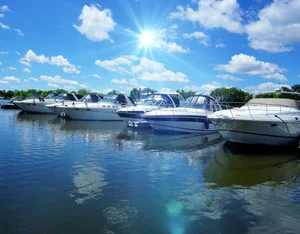
When buying a waterfront home on the Chain O’ Lakes, location on the water matters almost as much as the home itself. A channel-front property, a home in a protected bay or cove-like area, and a home directly on open lake water can offer very different experiences in boating access, views, water movement, dock conditions and everyday use.
Waterfront Is Not One Type of Property on the Chain O’ Lakes
Buyers often begin their search by saying they want a "lakefront home."
On the Chain O’ Lakes in Northern Illinois, that description can mean several very different things.
Some homes sit directly on large stretches of open lake. Others are located on channels that lead to one of the primary lakes. Still others sit along wider, more protected areas that may be described locally or in real estate marketing as bays, coves or inlets.
None of these locations is automatically better than another.
The best choice depends on what you want from waterfront living.
If you are new to the area, start with our complete guide to living on the Chain O’ Lakes to understand the larger waterway and lifestyle.
What Is the Chain O’ Lakes?
The Chain O’ Lakes is an interconnected waterway system in Lake and McHenry Counties in Northern Illinois.
The Fox Waterway Agency defines its Chain O’ Lakes zone as extending from the Fox River at Pistakee Lake north to the Wisconsin state line and including 15 interconnected lakes within its jurisdiction.
The Illinois Department of Natural Resources describes the principal recreational Chain as 10 lakes: Grass, Marie, Nippersink, Bluff, Fox, Pistakee, Channel, Petite, Catherine and Redhead.
For buyers, the important point is that this is not one uniform lake. It is a network of lakes, rivers and navigable channels, with dramatically different waterfront settings.
Our Chain O’ Lakes lake guide explains the individual lakes in more detail.
What Is a Channel-Front Home?
A channel-front home is located on a narrower waterway that connects to the broader Chain O’ Lakes system.
For boaters, channel frontage can be very appealing because many properties provide the possibility of docking a boat close to the home while still offering access to larger lakes.
The experience, however, varies considerably from one channel to another.
Some channels are relatively wide and provide straightforward access to a nearby lake. Others can be narrower, shallower or farther from open water.
Channel-front buyers should investigate:
Water depth at or near the proposed dock
Water depth along the route to open water
Width of the channel
Turning space for the type of boat they own
Distance and travel time to the main lake
Bridges, restrictions or other obstacles along the boating route
Shoreline condition
Existing dock or pier configuration
Aquatic vegetation
Sediment accumulation
The Fox Waterway Agency says its dredging program focuses primarily on main navigational channels and channel mouths serving larger numbers of boaters. The agency also estimates that up to 100,000 cubic yards of new sediment can enter the Fox River and Chain O’ Lakes system each year from runoff and shoreline erosion.
That is one reason buyers should never assume that a waterfront property is suitable for a particular boat simply because the listing says it has Chain O’ Lakes access.
Why Do Some Buyers Prefer Channel Frontage?
Channel-front homes can offer several practical advantages depending on the specific location.
Because channels are narrower and generally more protected than broad stretches of lake, some buyers prefer them for docking and entering or leaving their boat.
They can also offer a different atmosphere from open water.
A buyer who cares primarily about keeping a boat behind the house and getting onto the Chain may value easy channel access more than an expansive lake view.
Another buyer may feel exactly the opposite.
That is why the first question should not simply be, "Is it waterfront?"
A better question is, "How do we plan to use the waterfront?"
What Is a Bay or Cove Location?
"Bay," "cove" and similar descriptions are often used for wider areas that are somewhat protected from the main body of a lake.
These terms are not necessarily formal real estate categories, and local terminology can vary.
A bay-area property may provide a broader view than a narrow residential channel while still feeling somewhat removed from the most exposed portion of a larger lake.
That combination can appeal to buyers who want visible open water without necessarily being positioned directly on the busiest or most exposed section of the lake.
However, buyers still need to evaluate the actual property.
A protected location does not guarantee deep water, easy navigation or a particular level of boat traffic.
What Does Open-Water Lakefront Mean?
Open-water lakefront generally describes property located directly along the main body of one of the larger lakes rather than inside a narrower channel.
For many buyers, the primary attraction is the view.
Open lake frontage can provide:
Wider water views
Longer sightlines
Direct access to the lake
A stronger feeling of being "on the lake"
Potentially easier access to the main boating area
But open water also comes with considerations.
Wind, waves, wakes and boat traffic can affect shoreline exposure and the movement of a boat at the dock. Conditions vary significantly depending on the lake, direction the property faces, nearby boating routes, weather and the location of the home.
A property that feels calm at 9 a.m. on a weekday may feel very different on a busy summer afternoon.
Whenever possible, buyers should experience a waterfront property more than once before making a decision.
Is Open Water Better Than a Channel?
Not necessarily.
Open water and channel frontage serve different priorities.
A buyer who wants panoramic lake views may strongly prefer open water.
A buyer who owns a boat and prioritizes a more protected docking location may prefer a channel.
Someone who enjoys kayaking or fishing directly behind the home may evaluate the water differently from a buyer who owns a large powerboat.
This is why we encourage buyers to tell us about the boat, not just the house.
Important details include:
Boat length
Draft
Beam
Type of propulsion
Whether a lift is needed
How frequently the boat will be used
Whether the buyer plans to reach restaurants, other lakes or the Fox River regularly
The home and the water need to work together.
Water Depth Deserves Special Attention
Water depth is one of the most important factors to investigate when buying waterfront property.
Do not rely on a casual estimate or assume the depth is consistent throughout a channel or shoreline.
Depth can vary by location and may be affected by sedimentation, aquatic vegetation and changing water conditions.
A buyer with a shallow-draft fishing boat may have very different requirements from someone purchasing a larger cruiser.
If boating access is critical to the purchase, investigate the specific route from the dock to navigable open water.
The Fox Waterway Agency provides maps and information about navigational areas, dredging and the broader waterway system. Its current map includes marinas, boat launches, parks and other locations around the waterway.
Think About the Entire Boating Route
The water immediately behind the home is only the beginning.
Ask yourself where you actually want to go.
Do you want quick access to Fox Lake?
Will you regularly travel toward Grass Lake or Lake Marie?
Do you want to reach waterfront restaurants?
Will you primarily fish close to home?
Would you rather cruise throughout the Chain?
The distance from the property to open water can make a meaningful difference in how you use the home.
A beautiful channel property may be perfect for one buyer and frustrating for another if reaching the desired part of the Chain takes longer than expected.
Boat Traffic Can Change the Experience
The Chain O’ Lakes is an active recreational waterway.
That is part of its appeal.
It also means buyers should consider how nearby boat traffic affects the particular property.
Homes near major boating routes can offer extremely convenient access, but may experience more activity.
Properties farther into channels or protected areas may have a different feel.
Rather than treating "quiet" or "busy" as universally good or bad, decide which experience better fits the way you plan to enjoy the property.
Do Not Forget the Shoreline and Dock Area
The house itself is only part of a waterfront inspection.
Look carefully at the waterfront.
Questions to investigate may include:
What type of shoreline is present?
What condition is it in?
Is there an existing pier, dock or lift?
What water depth exists around the docking area?
How is the dock positioned?
How much space is available for your boat?
Does aquatic vegetation affect access?
Is erosion visible?
Are permits or approvals required for improvements you are considering?
Rules affecting public waterways, shorelines, aquatic vegetation and structures can involve different agencies depending on the proposed work.
Buyers should verify requirements with the appropriate governmental authority before assuming they can modify a shoreline, dredge an area, install structures or remove aquatic vegetation.
Flood Risk Should Be Part of Your Waterfront Research
Waterfront buyers should also investigate flood information for the specific property.
Flood exposure is property-specific and should not be inferred simply from whether a home sits on a channel or open lake.
Lake County provides floodplain mapping and flood information resources, while FEMA maintains official flood maps.
Insurance professionals, municipalities and other appropriate experts can help buyers understand how the available information relates to a particular property.
Visit the Property From the Water When Possible
One of the most useful things a serious waterfront buyer can do is see the property from the water.
The perspective can be completely different.
You may notice:
How narrow or wide the channel feels
Nearby docks
Boat traffic
The route to the lake
Shoreline conditions
Neighboring waterfront uses
Exposure to open water
How easy the property is to identify from the lake
If a boat is an important part of your lifestyle, the boating experience should be part of evaluating the home.
Our guide to buying a Chain O’ Lakes waterfront home covers additional considerations for waterfront buyers.
Make a Waterfront Priority List Before You Search
Before looking at homes, rank what matters most.
For example:
Direct boating access
Open-water view
Protected docking area
Water depth
Short trip to the main lake
Fishing access
Space for a particular boat
Outdoor entertaining area
Sunrise or sunset exposure
Year-round residence versus weekend property
You may discover that the right channel home fits your lifestyle better than a more expensive open-lake property.
Or you may decide that an unobstructed lake view is non-negotiable.
Knowing that before touring homes can make the search much more productive.
Chain O’ Lakes Communities Offer Different Waterfront Choices
Waterfront properties are spread across multiple communities and neighborhoods throughout Lake and McHenry Counties.
Communities closely associated with the Chain include Fox Lake, Antioch, Johnsburg, Ingleside, Lake Villa and Spring Grove.
Each area connects to the broader waterway differently.
Our guide to the communities around the Chain O’ Lakes can help buyers understand the geography before narrowing their home search.
You can also explore our guide to homes for sale on the Chain O’ Lakes.
The Star Home Team's Perspective
When someone tells us they want a waterfront home on the Chain O’ Lakes, one of the most important things we can learn is what they picture themselves doing after they move in.
Are they imagining coffee overlooking a wide lake?
Keeping a fishing boat behind the house?
Taking a pontoon to dinner?
Kayaking from a protected channel?
Spending weekends cruising throughout the Chain?
Those answers can completely change which properties make sense.
We believe buyers should evaluate waterfront homes based on both the real estate and the water itself.
The right house in the wrong waterfront setting may not provide the experience you were hoping for.
The right combination can make all the difference.
Frequently Asked Questions About Channels, Bays and Open Water on the Chain O’ Lakes
Is a channel-front home considered waterfront property?
Yes, a home located directly on a navigable channel can be a waterfront property. However, the experience can differ considerably from direct open-lake frontage. Buyers should verify water depth, navigation, docking space and the route from the property to the larger Chain rather than relying only on the waterfront label.
Is a channel or open lake better for a boat?
It depends on the boat and how you plan to use it. Some channel locations can provide more protected docking conditions, while open-lake properties can provide faster access to the main body of water. Water depth, channel width, boat draft and the route to open water should all be evaluated for the specific property.
Are all channels on the Chain O’ Lakes navigable?
No buyer should assume that every channel provides the same level of navigability. Width, depth, sedimentation, vegetation and other conditions can vary. The Fox Waterway Agency maintains main navigational channels and channel mouths, but buyers should investigate the exact route associated with a specific property.
Are waterfront homes on bays quieter than open-water homes?
A bay or protected area may experience different water movement and traffic than a home directly on a main boating route, but conditions vary significantly by location. Buyers should visit the property at different times and, when possible, experience the location from the water before deciding whether it fits their preferences.
Why does water depth matter when buying a lake house?
Boat requirements vary. A boat with greater draft needs more water beneath it than a shallow-draft boat. Depth can also vary between the dock, channel and main navigation route. Buyers who consider boating essential should investigate the complete route from the property to open water.
Should I check flood maps before buying on the Chain O’ Lakes?
Yes. Flood exposure should be investigated for the individual property. FEMA and local county agencies provide flood mapping resources. Buyers should also speak with appropriate insurance and property professionals about the specific home rather than assuming all waterfront properties have the same flood considerations.
Can I dredge behind a waterfront home if the water is too shallow?
Do not assume that private dredging can be performed without approvals. Work in or affecting public waterways can be subject to governmental regulations and permitting. The Fox Waterway Agency maintains information about dredging requests, and buyers should verify the requirements that apply to any proposed work before purchasing a property based on future dredging plans.
What should I check before making an offer on a Chain O’ Lakes waterfront home?
In addition to evaluating the home itself, investigate water depth, boat access, dock configuration, shoreline condition, flood information, the route to open water, boat traffic and any planned waterfront improvements. If boating is important, make sure the property works for the boat you intend to use.
Conclusion
Choosing between a channel, bay or open-water property on the Chain O’ Lakes is less about finding the "best" type of waterfront and more about finding the waterfront that matches the way you want to live.
A panoramic lake view, a protected place to keep a boat and quick access to your favorite part of the Chain are different priorities.
Before buying, evaluate the home, the dock, the shoreline and the entire route from your backyard to the water you plan to enjoy.
That extra research can help you find a property that works both on land and on the lake.
Sources
Fox Waterway Agency
Waterway Zones
Current resource
https://foxwaterway.com/waterway-zones/
Fox Waterway Agency
Request for Dredging
Current resource
https://foxwaterway.com/request-for-dredging/
Fox Waterway Agency
FWA Map
Current resource
https://foxwaterway.com/fwa-map/
Fox Waterway Agency
Frequently Asked Questions
Current resource
https://foxwaterway.com/frequently-asked-questions/
Illinois Department of Natural Resources
Chain O’ Lakes State Park
Current resource
https://dnr.illinois.gov/parks/park.chainolakes.html
Illinois Department of Natural Resources
Activities at Chain O’ Lakes State Park
Current resource
https://dnr.illinois.gov/parks/activity/park.chainolakes.html
Lake County Stormwater Management Commission
Floodplain Buyout Program and Flood Information Resources
Current resource
https://www.lakecountyil.gov/5145/Floodplain-Buyout-Program
About the Author
Susan Starwalt is the Broker Owner of Better Homes and Gardens Real Estate Star Homes and The Star Home Team, serving Northern Illinois and Southern Wisconsin. Licensed since 1998, Susan works alongside Jim Starwalt and the company's management team to support one of the region's top-producing real estate organizations.
The Star Home Team has helped more than 4,000 families buy and sell homes and is recognized as one of Illinois' leading real estate teams. The team serves buyers and sellers throughout Lake County, McHenry County, Kenosha County, and surrounding communities, providing expert guidance, local market knowledge, innovative marketing, and personalized service.
Ready to Take the Next Step?
Whether you're buying your first home, selling your current property, relocating, or simply exploring your options, The Star Home Team is here to help.
• Click here to search homes for sale.
• Learn more about buying and selling real estate in Northern Illinois and Southern Wisconsin by visiting our Real Estate Resource Center.
• Fill out our Contact Us form online to tell us about your real estate goals or send us a message anytime.
The Star Home Team proudly serves buyers and sellers throughout Northern Illinois and Southern Wisconsin.
Licensed in Illinois and Wisconsin.