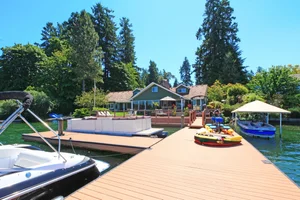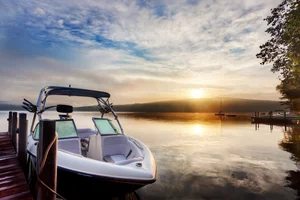
Living on the Fox River in McHenry County, Illinois, offers homeowners opportunities for boating, fishing, waterfront views, and access to communities such as McHenry and Johnsburg.
Before purchasing a riverfront home, buyers should carefully evaluate flood risk, boating access, shoreline conditions, dock permissions, seasonal water levels, and ongoing property maintenance.
Why Buyers Are Drawn to Fox River Waterfront Living
Imagine enjoying your morning coffee while looking out over the Fox River, watching boats pass by on a summer afternoon, or spending an evening relaxing beside the water.
For many home buyers, that is the appeal of riverfront living in McHenry County.
The Fox River is an important part of Northern Illinois' waterfront landscape, connecting communities, recreational areas, and the Chain O’Lakes waterway system.
Unlike a traditional neighborhood home, however, a riverfront property comes with additional considerations.
Understanding those differences before purchasing can help buyers make more informed decisions about where to live, what type of property to purchase, and how to plan for long-term ownership.
Where Can You Find Fox River Waterfront Homes in McHenry County?
The Fox River travels through several communities in McHenry County, including areas near Johnsburg, McHenry, Holiday Hills, and Algonquin.
The riverfront experience can vary significantly depending on the location.
McHenry, Illinois
McHenry offers access to the Fox River along with established neighborhoods, shopping, restaurants, parks, and other community amenities.
Some properties provide direct river frontage, while others are located near the water without private boating access.
Buyers should distinguish between owning waterfront property and simply living within walking or driving distance of the river.
The Star Home Team also maintains a real estate office in McHenry, providing a local presence for buyers and sellers exploring this part of McHenry County.
Johnsburg, Illinois
Johnsburg is another community worth exploring for buyers interested in Fox River and Chain O’Lakes-area properties.
Depending on the location, buyers may find riverfront homes, properties along channels, or homes with access to nearby lakes and waterways.
Some locations may appeal to buyers who want recreational boating opportunities, while others may be better suited to enjoying waterfront scenery.
Southern McHenry County
Farther south, the Fox River continues toward communities including Algonquin.
These areas may offer a different waterfront experience from properties closer to the Chain O’Lakes.
The presence of dams, bridges, changing river conditions, and different boating routes makes it especially important to investigate the exact location of a property.
A home advertised as being on the Fox River does not automatically provide unrestricted boating access throughout the waterway.
How Is Living on the Fox River Different From Living on the Chain O’Lakes?
One of the most important decisions for waterfront buyers is whether they prefer a riverfront property or a lakefront property.
Both can provide appealing views and outdoor recreation, but the experience is not necessarily the same.
Riverfront Living
Fox River properties may offer views of passing boats, tree-lined shorelines, and access to recreational boating and fishing.
However, the river's current, depth, width, and boating conditions can vary by location and season.
Some sections may have more noticeable boat traffic or different navigational limitations than others.
Lakefront Living
Lakefront properties on the Chain O’Lakes may offer larger open-water views, direct access to individual lakes, and different boating opportunities.
Wind exposure, waves, shoreline configuration, and recreational activity can vary from lake to lake.
Buyers comparing these options may find our guide to choosing a Chain O’Lakes lake helpful.
Neither setting is automatically better.
The right choice depends on how the buyer intends to use the property and enjoy the water.
Understanding Fox River Boating Access
For buyers who own a boat or plan to purchase one, boating access should be investigated before making a commitment to a property.
The Fox River connects with the Chain O’Lakes system, but not every section offers the same boating routes.
One important feature is the William G. Stratton-Thomas A. Bolger Lock and Dam near McHenry.
The lock provides a navigational passage between the Chain O’Lakes and the Fox River downstream.
According to the Illinois Department of Natural Resources, the regular 2026 boating season for the lock runs from May 1 through October 31, with different operating hours during the season.
The lock is generally closed during the winter season.
Buyers should investigate whether their intended boating activities require traveling through the lock and how seasonal operations could affect their plans.
Questions Boaters Should Ask Before Buying
Can the property accommodate the size and draft of your boat?
Is there sufficient water depth near the shoreline and dock?
Are there bridges or other navigational restrictions along your intended route?
Can you reach your preferred lakes, marinas, or restaurants by water?
Does the property have an existing dock or boat lift?
Are there restrictions on installing or modifying waterfront structures?
How do changing water levels affect access?
The Illinois Department of Natural Resources Stratton Lock and Dam information is a useful starting point for understanding navigation and water-level management.
Flood Risk Is an Important Consideration for Fox River Buyers
Flood risk is one of the most important factors to investigate when purchasing a riverfront home.
The Fox River watershed extends into Wisconsin, meaning rainfall and runoff from areas beyond McHenry County can influence downstream river conditions.
Water levels may change following heavy rainfall, snowmelt, or other weather events.
The Illinois Department of Natural Resources monitors water conditions and manages dam operations using river measurements and hydrologic information.
However, water-level management does not eliminate the possibility of flooding.
How Can Buyers Research Flood Risk?
Buyers should begin by reviewing the property's location through the Federal Emergency Management Agency's Flood Map Service Center.
The FEMA mapping system provides information about designated flood hazard areas.
A property located within a designated flood zone may be subject to additional insurance or financing requirements.
Even properties outside mapped high-risk flood areas can experience flooding.
Buyers should consider requesting information about previous water intrusion, reviewing available disclosures, consulting insurance professionals, and investigating whether additional inspections are appropriate.
Flood insurance requirements and costs depend on the individual property, its flood designation, insurance options, and lender requirements.
Buyers should obtain property-specific guidance before making financial decisions.
Visit the FEMA Flood Map Service Center to begin researching an address.
Why Seasonal Water Levels Matter
A riverfront property may look different in April than it does in July or November.
Seasonal rainfall, snowmelt, drought, and water-management operations can affect water levels.
The Illinois Department of Natural Resources describes winter drawdown procedures associated with the Chain O’Lakes and Stratton Dam.
These operations help provide additional water storage capacity for managing seasonal conditions.
For a buyer, changing water levels can affect the practical use of a dock, boat lift, or shoreline.
A property that appears to offer excellent boating access during one season may have different conditions at another time of year.
When possible, buyers should ask about seasonal conditions and review available historical information rather than relying solely on what they observe during one showing.
Inspecting Docks, Shorelines, and Riverfront Improvements
Waterfront properties often include improvements that traditional residential homes do not.
These may include docks, piers, boat lifts, retaining walls, seawalls, and shoreline landscaping.
Each improvement deserves careful evaluation.
For example, a dock may look attractive but require repairs, replacement, or verification of its permitted status.
Shoreline erosion may create maintenance concerns.
A retaining wall or seawall may have structural issues that are not immediately visible during a casual property tour.
The Illinois Department of Natural Resources regulates certain activities involving waterways, including work in designated floodways and along public waters.
Before purchasing, buyers should investigate applicable permits, ownership rights, and restrictions with the appropriate agencies.
An experienced waterfront property inspector or qualified contractor may also be helpful when evaluating specialized improvements.
For more information, read our guide to piers, seawalls, and shorelines for Chain O’Lakes home buyers.
What Does It Cost to Maintain a Fox River Home?
Riverfront living can involve expenses beyond those associated with a traditional residential property.
Potential costs may include:
Dock and boat-lift maintenance
Shoreline stabilization or erosion repairs
Flood insurance, where appropriate or required
Waterfront landscaping and drainage improvements
Seasonal dock removal or winterization, if needed
Repairs related to moisture exposure or water intrusion
Boat storage, marina services, or waterway-related fees
Not every waterfront home will have all these expenses.
A property with a simple natural shoreline may have different maintenance needs from one with extensive docks, retaining walls, and boat lifts.
Buyers should evaluate the actual improvements and conditions of the property rather than relying on generalized waterfront maintenance estimates.
Does a Fox River Home Have to Be Directly on the Water?
No.
Some buyers prefer a home directly on the Fox River, while others may be satisfied living nearby.
Direct waterfront ownership may offer immediate access to the water, depending on the property's rights and physical characteristics.
Homes located near the river may offer convenient access to public parks, boat launches, or marinas without requiring the same level of private shoreline maintenance.
For buyers who primarily want occasional boating or fishing opportunities, a nearby home may be worth comparing with a direct waterfront property.
The important distinction is understanding what access is legally and physically available.
What Should Buyers Investigate Before Making an Offer?
Purchasing a Fox River property involves many of the same steps as buying any home, but the waterfront location creates additional questions.
Before making an offer, consider the following:
Property boundaries: Determine what land and shoreline areas are included in the property.
Flood history: Review available disclosures, flood maps, and relevant records.
Boating access: Confirm water depth, navigational routes, and any restrictions.
Dock and shoreline conditions: Evaluate existing improvements and their maintenance needs.
Permits and regulations: Investigate applicable requirements for docks, shoreline modifications, and future construction.
Insurance: Obtain information about homeowners and flood insurance availability and costs.
Seasonal conditions: Ask how water levels, currents, and weather affect the property throughout the year.
Long-term plans: Consider whether the property's waterfront features will continue to meet your needs.
A waterfront home should be evaluated for both its appeal and its practical ownership responsibilities.
For additional buying guidance, explore our Chain O’Lakes waterfront home buying checklist.
The Star Home Team's Perspective on Fox River Real Estate
At The Star Home Team, we believe buyers benefit from understanding the differences between waterfront properties before deciding which home is right for them.
A beautiful view is certainly appealing, but buyers also need to consider the property's location, water access, maintenance requirements, and long-term suitability.
Our team serves buyers and sellers throughout McHenry County, Lake County, and surrounding Northern Illinois communities.
With offices in McHenry and Grayslake, we provide local real estate guidance to people exploring waterfront homes and other residential properties.
For additional information about the broader waterfront region, explore our Chain O’Lakes Life articles and community guides.
Frequently Asked Questions About Living on the Fox River
Is the Fox River connected to the Chain O’Lakes?
Yes. The Fox River is a major part of the Chain O’Lakes waterway system in Northern Illinois.
The river connects lakes and waterways in the region, while the Stratton Lock and Dam near McHenry provides a navigational passage between the Chain O’Lakes and the Fox River downstream.
Actual boating routes depend on water conditions, navigational restrictions, and seasonal lock operations.
Can you keep a boat at a Fox River waterfront home?
Some Fox River properties have private docks, boat lifts, or other boating facilities.
However, not every waterfront home provides suitable or legally permitted docking access.
Buyers should investigate water depth, shoreline conditions, property rights, permits, and restrictions before assuming they can keep a particular boat at the property.
Do Fox River waterfront homes require flood insurance?
Not every Fox River waterfront home automatically requires flood insurance.
Requirements can depend on the property's flood-zone designation and mortgage financing.
Buyers should review FEMA flood maps, consult their lender, and obtain property-specific insurance information.
Flooding can also occur outside designated high-risk areas.
Are Fox River water levels the same throughout the year?
No. Fox River water levels can change due to rainfall, snowmelt, drought, and water-management operations.
The Illinois Department of Natural Resources monitors conditions and operates water-control structures along the river system.
Buyers should investigate how seasonal changes may affect a property's shoreline and boating access.
What is the difference between a riverfront home and a lakefront home?
A riverfront home is located along a flowing waterway, while a lakefront home borders a lake.
Riverfront properties may experience current and different navigation conditions.
Lakefront properties may experience greater open-water wind and wave exposure.
Actual conditions vary by location, making individual property research essential.
Are there Fox River waterfront homes in McHenry and Johnsburg?
Yes. McHenry and Johnsburg are among the McHenry County communities where buyers can explore properties along or near the Fox River and connected waterways.
Available homes vary in location, price, shoreline features, and boating access.
Buyers should verify whether each listing includes direct waterfront ownership, shared access, or simply proximity to the water.
Can you build a new dock or seawall on a Fox River property?
Possibly, but permission depends on the property's location, the proposed improvement, and applicable regulations.
Certain work along waterways or within floodways requires authorization from the Illinois Department of Natural Resources or other relevant agencies.
Buyers should verify requirements before purchasing a property with plans for shoreline construction.
Is a Fox River waterfront home a good investment?
A Fox River home may be a suitable purchase for someone who values waterfront living, but its investment potential depends on many factors.
Location, condition, flood exposure, insurance costs, shoreline maintenance, market conditions, and resale demand can all affect ownership costs and future value.
Buyers should review comparable sales and property-specific expenses rather than assuming waterfront location guarantees appreciation.
Explore Fox River Waterfront Homes With The Star Home Team
Living on the Fox River can offer an appealing combination of waterfront scenery, recreational opportunities, and access to McHenry County communities.
The key is finding a property that fits both your lifestyle and your expectations for homeownership.
Whether you're interested in a home along the Fox River in McHenry, exploring Johnsburg waterfront properties, or comparing riverfront and lakefront living, our team can help you understand your real estate options.
Ready to explore waterfront homes in McHenry County?
Visit The Star Home Team to explore homes for sale or connect with our team about your waterfront home search.
Sources and Additional Resources
Illinois Department of Natural Resources: Stratton Lock and Dam
Illinois Department of Natural Resources: Stratton Operations Updates
Federal Emergency Management Agency: Flood Map Service Center
About the Author and The Star Home Team
Susan Starwalt is the Broker Owner of Better Homes and Gardens Real Estate Star Homes and The Star Home Team, serving Northern Illinois and Southern Wisconsin.
Licensed since 1998, Susan works alongside Jim Starwalt and the company's management team to help buyers and sellers navigate the real estate process.
The Star Home Team has helped more than 4,000 families buy and sell homes, serving Lake County, McHenry County, Kenosha County, and surrounding communities.
Our team provides local market knowledge, real estate guidance, marketing, and personalized service.
The Star Home Team is licensed in Illinois and Wisconsin.
Better Homes and Gardens Real Estate Star Homes
The Star Home Team
Grayslake and McHenry, Illinois
847-548-2625
Equal Housing Opportunity.
Information is provided for general educational purposes and should be independently verified. Property features, flood risks, waterway access, regulations, and conditions may change.